Direct Geothermal Energy Is Revolutionizing Low-Carbon District Heating
How Direct Geothermal Energy Heats Communities
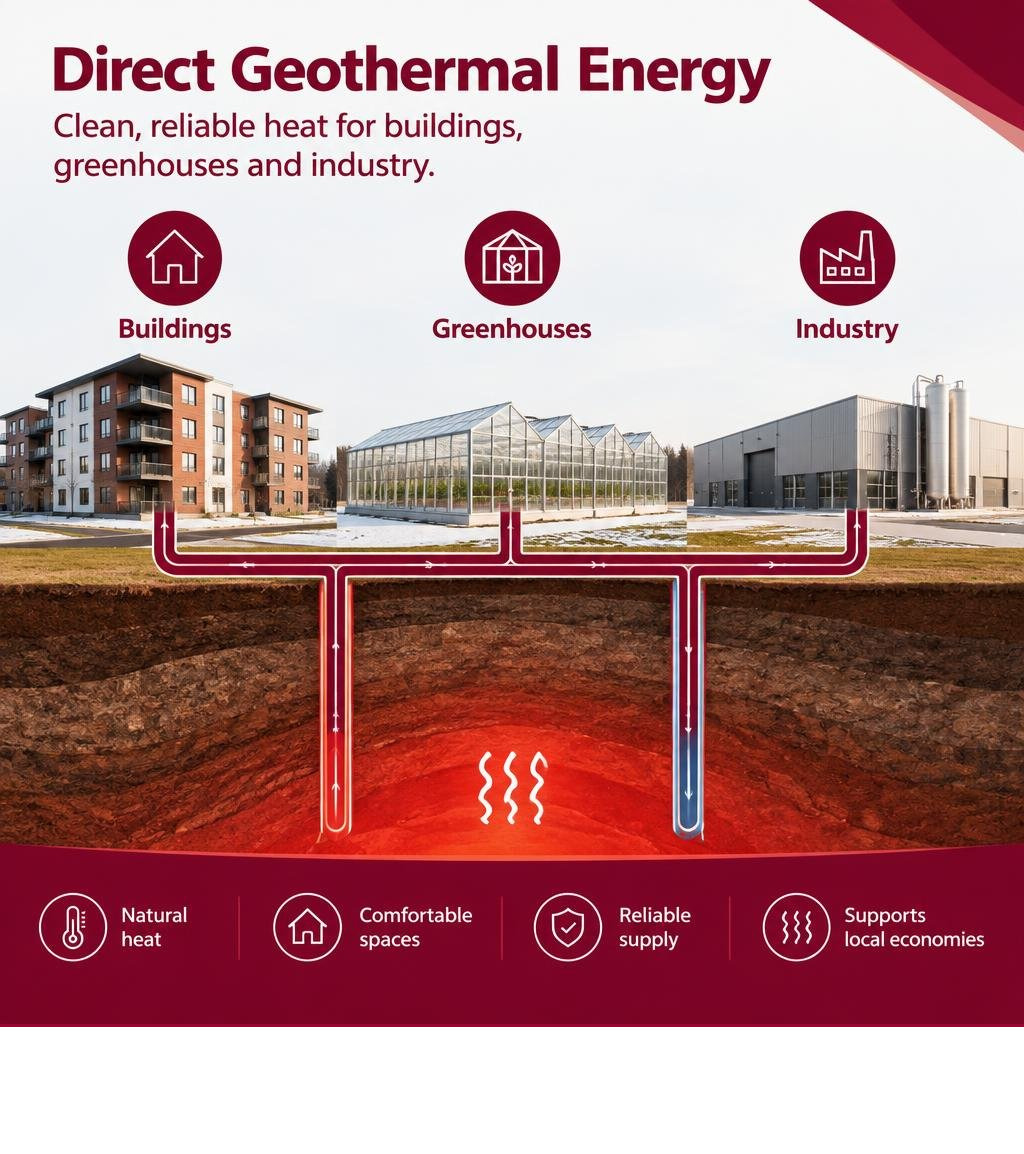
Direct geothermal energy uses heat from underground to warm buildings and supply hot water without first turning that heat into electricity. In a district heating system, shared pipes carry that heat to multiple buildings. The same source can also warm greenhouses or support industrial work that needs steady heat.
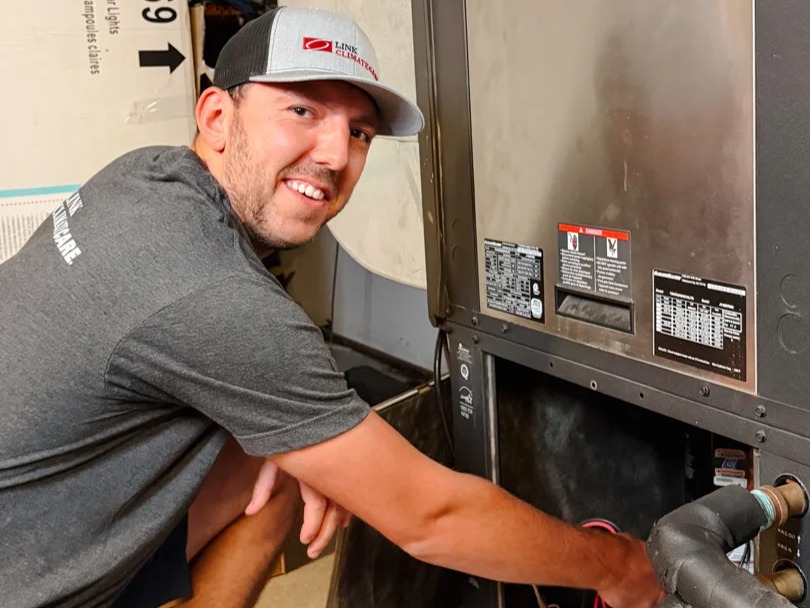
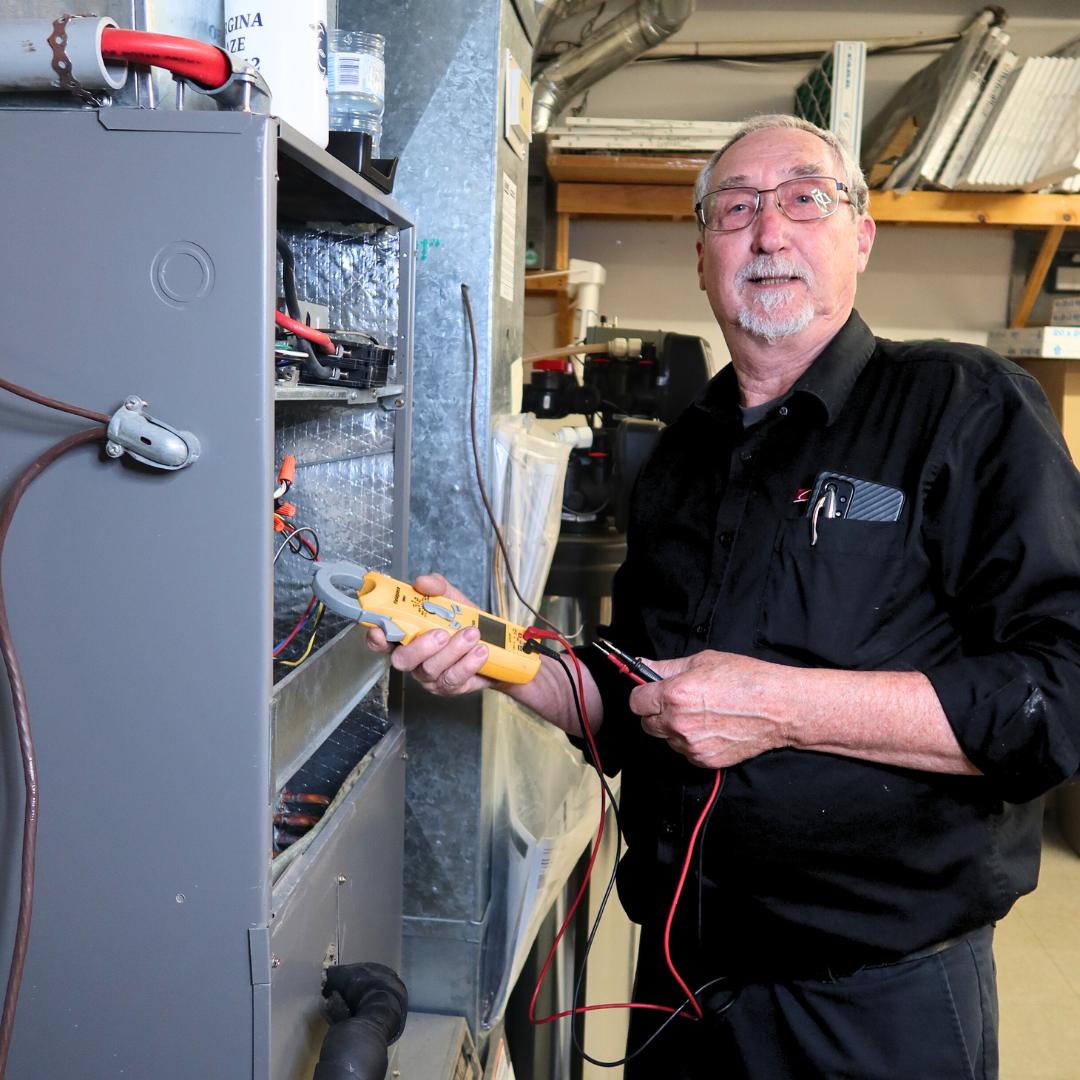
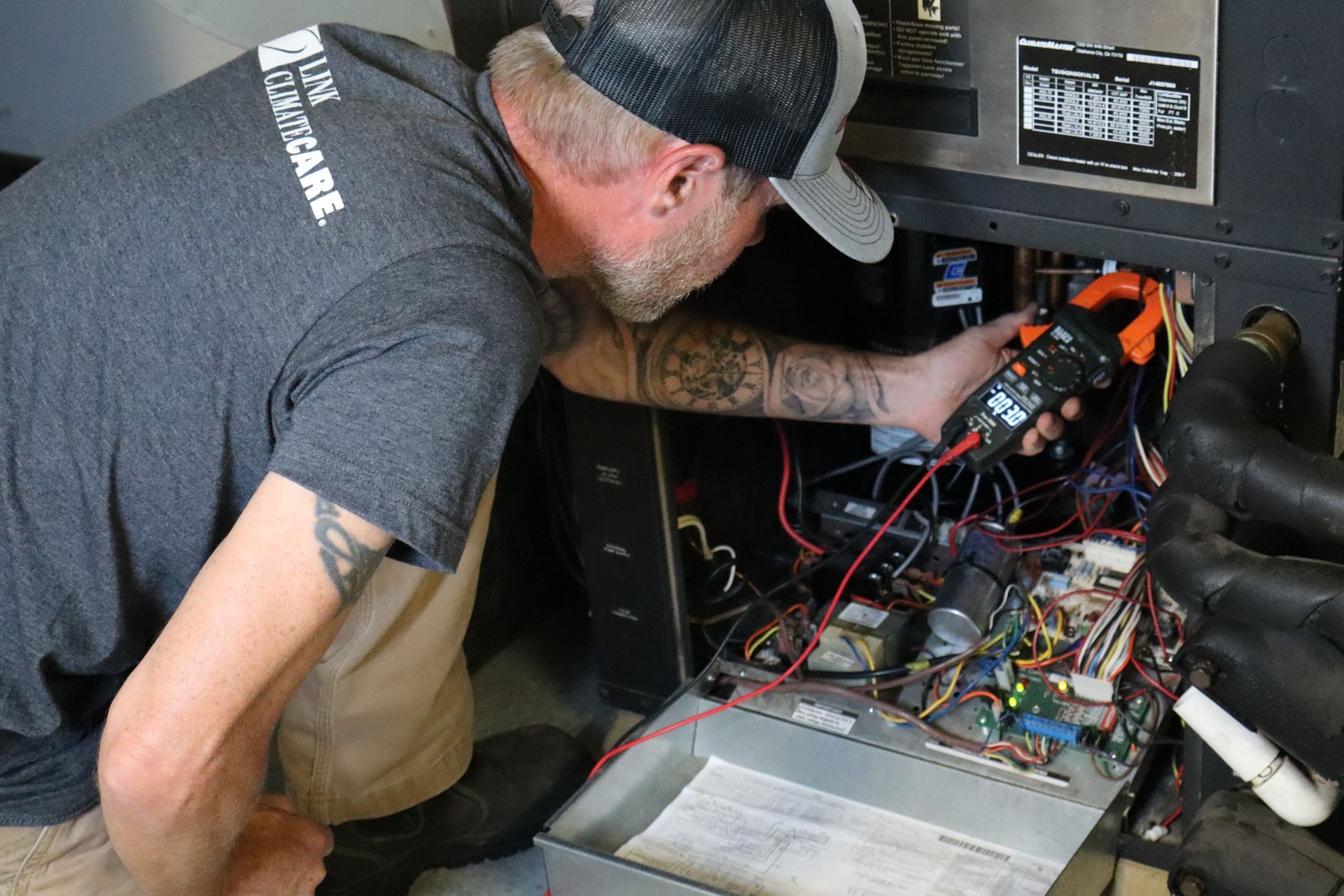
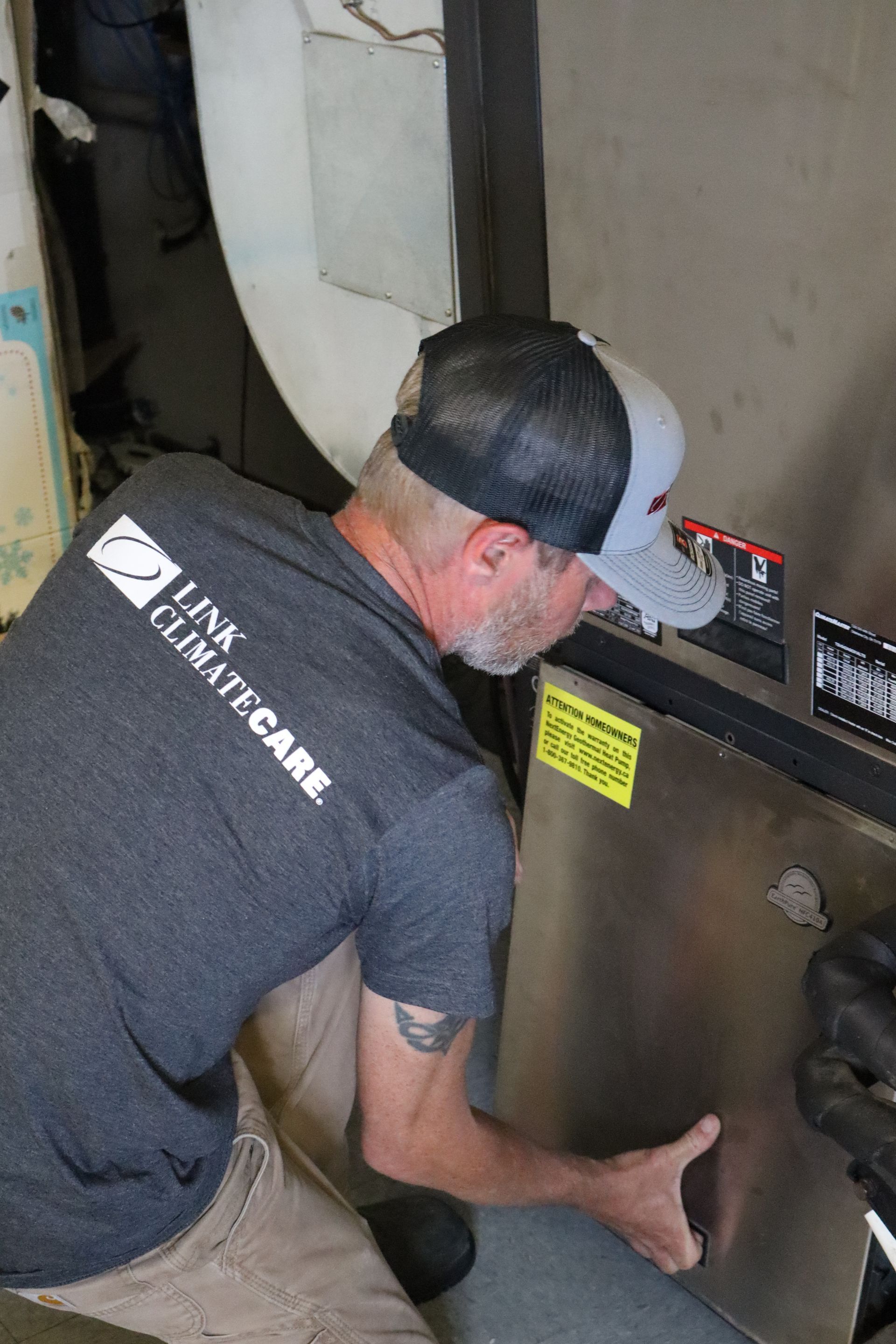
For homeowners in the Kawartha Lakes region, a ground-source geothermal system is a different, home-scale way to use the earth for heating and cooling. Contact Link ClimateCare to discuss whether geothermal is a good fit for your home.
What Is Direct Geothermal Energy and How Does It Work?
Direct geothermal energy utilizes the natural heat contained within the earth to meet thermal loads directly. Unlike systems that burn fossil fuels to generate steam or hot water, direct-use geothermal taps naturally warmed subsurface reservoirs. The subsurface temperatures used in these applications typically range from 80°F to 300°F (about 27°C to 150°C), making them ideal for space heating, domestic water heating, and low-temperature industrial processes.
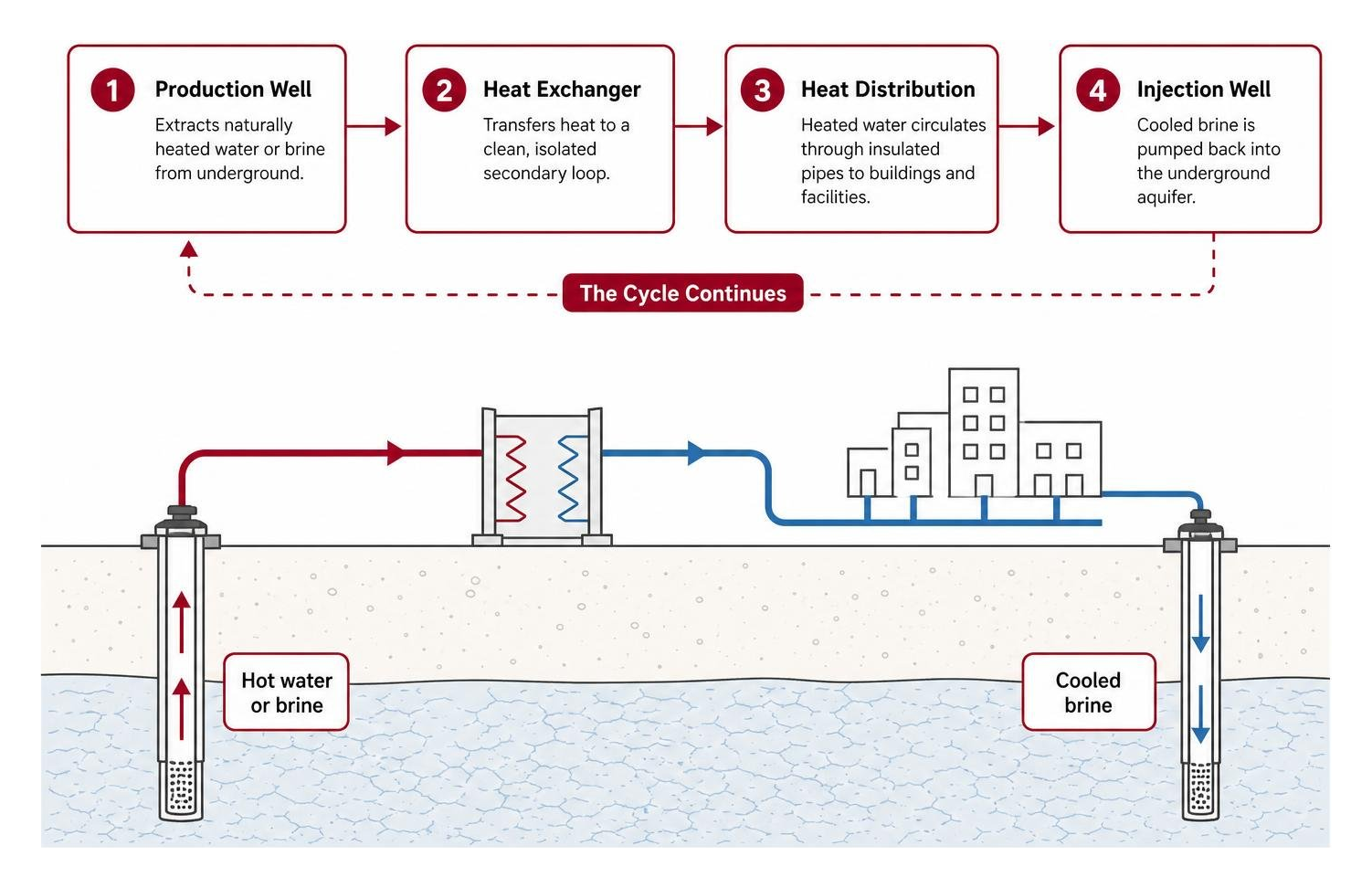
The extraction process relies on specialized subsurface engineering:
- Production Wells: Deep or medium-depth wells extract naturally heated water or brine from permeable subterranean aquifers.
- Heat Exchangers: The extracted geothermal fluid flows through plate-frame or shell-and-tube heat exchangers on the surface. These units transfer thermal energy to a clean, isolated secondary loop while keeping the mineral-rich geothermal brine completely separated from municipal or building water systems.
- Fluid Circulation: Circulator pumps push the secondary heated water through an insulated piping network to deliver heat across multiple properties or process facilities.
- Injection Wells: Once the thermal energy has been extracted, the cooled geothermal brine is pumped back down into the origin formation through dedicated injection wells. This maintains reservoir fluid levels, preserves subsurface pressure, and prevents surface contamination.
To understand how individual properties capture near-surface ground heat, explore how modern geothermal heating systems operate on a residential scale.
How Direct Geothermal Energy Differs from Electricity Generation
The difference between direct geothermal energy systems and geothermal power plants lies in resource temperature, conversion mechanics, and thermodynamic efficiency.
Geothermal power plants require high-temperature resources—often exceeding 300°F to 360°F (150°C to 182°C)—to produce steam that spins turbines and drives electrical generators. These power plants convert thermal energy into mechanical energy, and ultimately into electricity. Thermodynamic losses occur during this multi-stage conversion, meaning that only a portion of the thermal energy emerges as electrical power.
Direct-use systems bypass electrical conversion entirely. By transferring thermal energy straight from the earth into water-based heating loops, direct geothermal systems capture up to 90% or more of the usable heat from the extracted fluid. This allows communities to utilize low- to medium-temperature geothermal reservoirs that are not hot enough for conventional electricity generation.
Deep Direct Use and Thermal Energy Networks
Advances in subsurface drilling and community infrastructure have introduced two major approaches to district-scale heating: Deep Direct Use (DDU) and Thermal Energy Networks (TENs).
Deep direct use involves drilling deeper wells (often 3,000 to 10,000 feet) to access higher-temperature sedimentary formations in regions that lack shallow hot springs. These systems can supply large thermal loads for university campuses, healthcare facilities, and dense urban districts without needing extreme volcanic temperatures.
Thermal energy networks expand this capability by linking multiple buildings along a shared ambient-temperature or medium-temperature distribution loop. Rather than operating at the boiling temperatures of traditional district steam pipes, modern networks operate at lower temperature differentials. This reduces heat loss through the ground and allows diverse energy inputs, such as geothermal wells, industrial waste heat, and commercial cooling exhaust, to feed into the same system.
When combined with Underground Thermal Energy Storage (UTES), excess heat captured during the summer can be stored in subsurface rock or aquifers and extracted during the winter, balancing seasonal demands.
Major Sectors Transformed by Direct Heat Applications
Heating accounts for roughly half of global final energy consumption. As municipalities seek to transition away from fossil fuel boilers, direct geothermal energy offers a continuous, weather-independent thermal supply.
By using temperature cascading, directing the hottest fluids to high-temperature demands first, then routing the remaining heat to lower-temperature applications, communities maximize energy output from every gallon of water pumped.
To learn how whole-home equipment manages daily winter loads, review our guide to home heating.
Key Applications of Direct Geothermal Energy in Low-Carbon Systems
Direct-use geothermal systems support a wide range of municipal and commercial heating needs:
- District Space Heating: Insulated buried hydronic networks deliver hot water directly to central building substations, warming apartments, commercial offices, and municipal facilities.
- Domestic Hot Water: High-efficiency heat exchangers preheat or fully supply domestic potable water supplies.
- District Cooling via Absorption Chillers: Using thermally driven absorption chillers, geothermal heat can produce chilled water during hot summer months, providing low-emission district cooling. For single-property cooling insights, see our guide on home cooling.
- Snow and Ice Melting: Low-grade runoff heat circulating through under-pavement loops prevents ice buildup on public walkways, bridge decks, and emergency hospital access ramps.
Agricultural, Aquaculture, and Industrial Heat Integration
Beyond space conditioning, direct-use geothermal provides dependable process heat for local food production and industry:
- Greenhouse Heating: Geothermal loops maintain regulated soil and ambient temperatures inside commercial greenhouses, extending growing seasons into the winter without fossil fuel heating.
- Aquaculture Ponds: Controlled geothermal water additions regulate water temperatures for species like tilapia, catfish, and carp, accelerating growth cycles and preventing winter stock losses.
- Agro-Industrial Drying: Low-temperature geothermal convective dryers dehydrate fruit, grain, lumber, and alfalfa, preserving food stocks while cutting energy costs.
- Milk Pasteurization and Food Processing: Facilities tap steady thermal loops to supply the hot water needed for wash-down, food washing, and pasteurization stages.
Environmental and Socioeconomic Advantages of Geothermal District Heating
Direct geothermal energy provides distinct environmental and community benefits over conventional fossil-fueled district heating plants:
- Substantial Carbon Displacement: Direct geothermal systems operate without on-site fossil combustion. Replacing natural gas or coal boilers with direct-use geothermal avoids greenhouse gas emissions while delivering continuous baseload heat.
- Improved Air Quality: Geothermal systems produce zero on-site emissions of particulate matter, nitrogen oxides (NOx), or volatile organic compounds. Closed-loop heat exchangers reinject all extracted geothermal fluids, keeping sulfur compounds from entering the local atmosphere.
- Energy Independence and Price Stability: Because geothermal heat is generated locally beneath the ground, district energy providers are insulated from volatile international oil and natural gas prices.
- High Operational Reliability: Geothermal resources operate continuously, unaffected by outdoor weather extremes, wind droughts, or cloud cover.
For detached homes looking to achieve similar efficiency without municipal district hookups, high-efficiency heat pumps can tap the earth's shallow thermal reserves to heat and cool properties independently.
Global Adoption and Real-World Project Case Studies
Direct geothermal heating systems have proven their reliability across decades of operation around the globe:
- Reykjavik, Iceland: Over 90% of Reykjavik's buildings receive space heating and domestic hot water through extensive municipal geothermal district networks. The city phased out coal and oil boilers over several decades, making it a leading global example of geothermal district heating.
- Boise, Idaho, USA: Boise operates one of the oldest geothermal district heating systems in North America, running continuously since the 1890s. The system heats millions of square feet across downtown commercial buildings, the Idaho State Capitol, and residential properties.
- Whitby, Ontario, Canada: In Ontario, investments in low-carbon community developments demonstrate the viability of district geoexchange and thermal energy networks to serve mixed-use residential developments.
- Large-Scale District Systems in China: China has deployed over 40% of the world's direct-use geothermal heating capacity, relying on deep sedimentary aquifers to heat millions of square meters of residential housing across northern provinces.
- Campus Deep Direct-Use Demonstration Projects: North American universities, including Cornell University, have explored deep direct-use wells (reaching depths near 10,000 feet) to assess the feasibility of replacing legacy campus steam boilers with low-temperature geothermal loops.
Frequently Asked Questions About Direct Geothermal Energy
What subsurface temperatures are required for direct geothermal heating?
Direct geothermal applications typically utilize water temperatures between 80°F and 300°F (27°C to 150°C). Lower temperatures (80°F to 120°F) work well for radiant floor systems, aquaculture, and heat-pump-assisted networks, while higher temperatures (140°F to 300°F) can supply standard district heating loops, absorption chillers, and industrial drying.
How does direct geothermal heat support municipal decarbonization?
Because direct-use systems transfer heat without fossil fuel combustion, they replace carbon-intensive natural gas, heating oil, and coal boilers. This transition reduces municipal carbon emissions, eliminates local chimney exhaust, and provides a dependable baseload heating supply that eases peak winter strain on the electrical grid.
What are the main infrastructure requirements for geothermal district networks?
A complete geothermal district system requires:
- Production and injection well doublets to extract and return subsurface fluids.
- A central heat exchanger facility that isolates geothermal mineral brines from distribution water.
- Insulated distribution pipes buried beneath roadways to circulate warm water to connected properties.
- Building-level heat interface units that transfer heat from the municipal loop to internal hydronic heating networks.
Conclusion
Direct geothermal energy provides a proven, low-carbon approach to municipal space heating, agriculture, and industrial processing. By moving thermal energy directly from the earth into community networks, cities and commercial facilities can dramatically lower emissions while securing predictable, weather-independent heating.
If you are a homeowner in Beaverton, Lindsay, Peterborough, or throughout the Kawartha Lakes looking to harness geothermal technology on a residential scale, professional system planning is essential. To learn more about how ground-source installations work for single-family properties, read our guide on geothermal heating: ten common questions answered.
Ready to evaluate your home's heating and cooling options? Contact the team at Link ClimateCare today to schedule a consultation with our experienced HVAC professionals.