PTAC Heat Pump Repair Services for Landlords and Homeowners
When a PTAC Heat Pump Needs Professional Attention
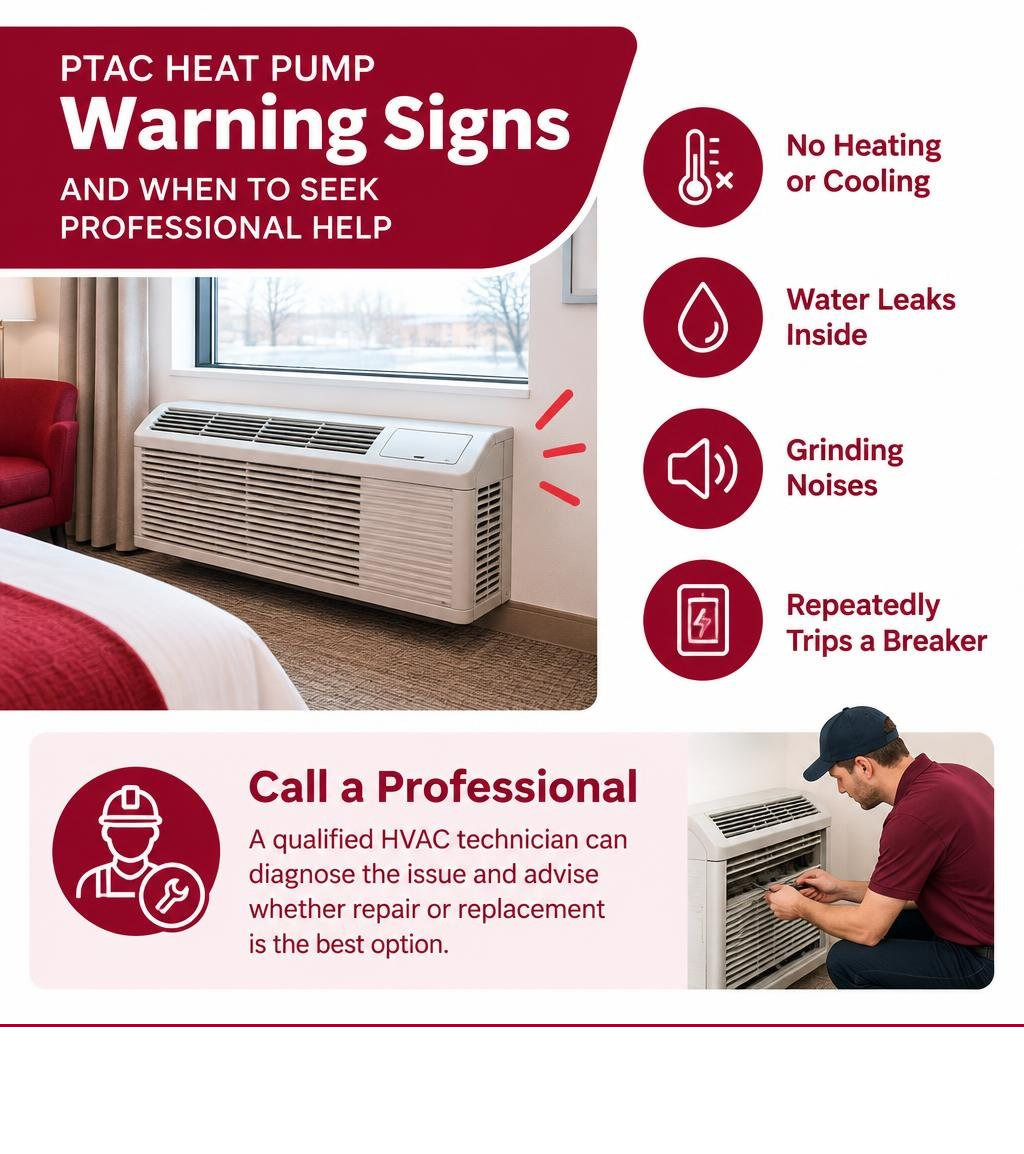
PTAC heat pump repair starts with a professional diagnosis. If the unit stops heating or cooling, leaks water indoors, makes grinding noises, or repeatedly trips a breaker, contact a qualified HVAC technician. These signs can point to airflow, drainage, electrical, or heat pump faults. A technician can identify the cause and advise whether repair or replacement makes more sense.
For homeowners and landlords in the Kawartha Lakes region, Link ClimateCare offers local heating and cooling support and 24/7 emergency response. Contact Link ClimateCare to discuss a unit that is not keeping the room comfortable.
Understanding Packaged Terminal Heat Pump Systems
Packaged terminal systems offer self-contained heating and cooling designed to fit neatly through an exterior wall. These systems house all the refrigeration, air handling, and heating components inside a single chassis. The chassis slides directly into a dedicated exterior wall sleeve, allowing individual rooms, guest suites, and additions to manage temperature independently without central ductwork.
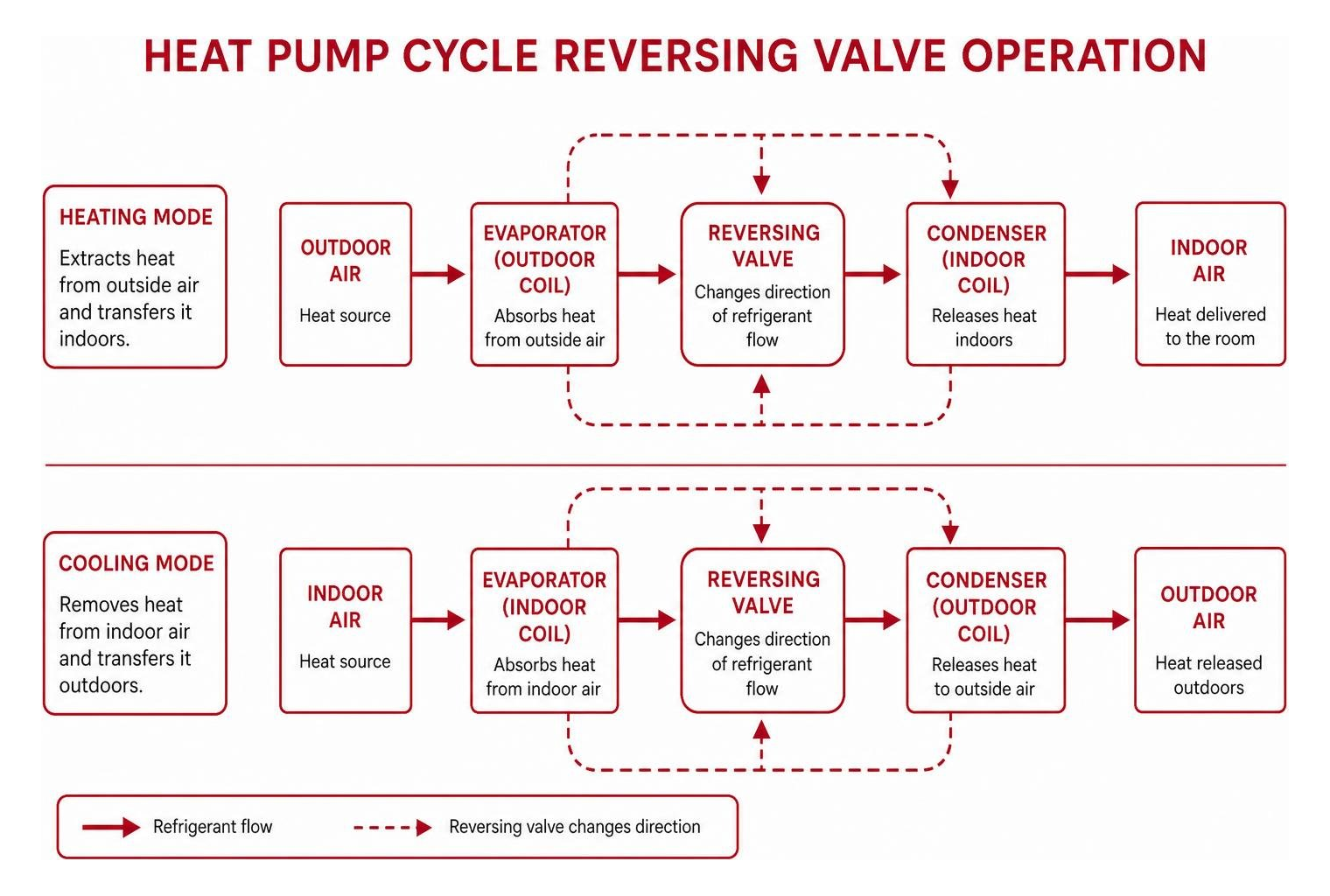
Modern terminal heat pumps use reverse-cycle refrigeration to move heat between indoor and outdoor spaces. A specialized component called a reversing valve switches the flow of refrigerant depending on the season. During colder weather, the system extracts available heat from the outside air and transfers it indoors. When temperatures fall below the optimal operating threshold of the heat pump circuit, the unit automatically activates supplemental electric resistance heating elements to maintain a comfortable indoor temperature.
Energy regulations across Canada ensure these systems meet strict performance and efficiency standards. For full regulatory context on equipment criteria, consult Packaged terminal heat pumps - Natural Resources Canada.
Difference Between Standard Cooling Units and Heat Pumps
The primary distinction between standard terminal air conditioners and heat pump models lies in how they generate warmth for home heating. Standard units rely entirely on electric resistance elements or supplemental hydronic coils. While effective, electric resistance heating uses substantially more electrical energy to generate thermal output.
In contrast, heat pump systems move thermal energy using the refrigeration loop. This mechanism delivers high seasonal heating efficiency under moderate outdoor conditions. When extreme winter temperatures reduce the heat pump’s output, the system seamlessly transitions to auxiliary electric heating coils.
Benefits for Multi-Unit Properties and Additions
For property managers, condominium owners, and landlords, packaged terminal systems provide zoned climate control. Each tenant or guest can adjust their individual room settings without impacting neighbouring spaces.
These units are also ideal for home additions, sunrooms, and converted living spaces where extending existing ductwork would be costly or impractical. Using efficient heat pump cooling during warm summers and reverse-cycle heating in the shoulder seasons allows property owners to manage comfort across individual living areas.
Common Issues Requiring PTAC Heat Pump Repair
Because packaged units operate year-round under changing weather conditions, mechanical components and electrical circuits experience continuous operational wear. When mechanical or electrical components degrade, professional heat pump repairs restore dependable home cooling and heating performance.
Warning Signs You Need PTAC Heat Pump Repair
Recognizing early warning signs helps prevent minor equipment faults from turning into complete system breakdowns:
- Loss of Heating or Cooling Capacity: The unit runs continuously but cannot reach the desired temperature setpoint.
- Indoor Water Leakage: Water accumulates on the floor beneath the unit or pools along the interior wall.
- Persistent Breaker Tripping: The unit shuts off unexpectedly and trips the electrical panel upon startup.
- Unusual Blower Vibration or Grinding: Rattling, squealing, or grinding sounds emerge from internal fan assemblies.
- Frost or Ice Buildup on Coils: Ice accumulates across the indoor evaporator or outdoor condenser surfaces during normal operation.
Critical Mechanical and Electrical Failures
Terminal units rely on tightly integrated components that require professional attention when they fail:
- Compressor Malfunctions: As the core of the sealed refrigeration loop, a struggling or seized compressor prevents temperature control and requires certified diagnostic testing.
- Failed Run Capacitors: Worn capacitors prevent blower motors or compressors from starting smoothly, leading to electrical overloads.
- Stuck Reversing Valves: If the reversing valve fails to shift, the system becomes locked in either cooling or heating mode regardless of thermostat commands.
- Corroded Heating Limit Switches: Moisture and heavy use can corrode electrical connections and safety limit switches on backup electric heat strips.
- Thermistor Sensor Inaccuracies: Faulty ambient or coil temperature sensors misread indoor conditions, causing erratic cycling or short cycling.
When to Schedule Professional PTAC Heat Pump Repair vs. Replacement
Deciding whether to repair an existing packaged terminal unit or replace it involves assessing equipment age, service history, and the extent of component failure.
Evaluating Equipment Age and Operational Lifespan
Packaged terminal units in heavy commercial or multi-family rental settings typically offer a service life of 7 to 10 years, whereas well-maintained residential installations in lighter use can last 15 years or more.
When a unit approaches the end of its typical operational lifespan and experiences major mechanical issues—such as a sealed refrigeration leak or compressor failure—chassis replacement is often the more practical and economical choice. However, for units that are relatively new, addressing minor electrical faults, motor replacements, or sensor issues through professional repair protects your original investment.
The Advantage of Standard Chassis Upgrades
One of the greatest advantages of packaged terminal systems is standard sizing. Most modern manufacturers build chassis to uniform dimensions of approximately 42 inches wide by 16 inches high.
When an older unit requires replacement, a new, high-efficiency chassis can slide directly into the existing wall sleeve. This eliminates the need for exterior masonry alterations, structural modifications, or drywall repairs while upgrading the property to modern energy performance standards.
What to Expect During Professional Servicing and Maintenance
Proper diagnostics and comprehensive maintenance ensure your terminal heating and cooling systems operate reliably across every season.
What to Expect During a Professional PTAC Heat Pump Repair
When our certified technicians service a terminal heat pump, we follow a comprehensive diagnostic and repair process:
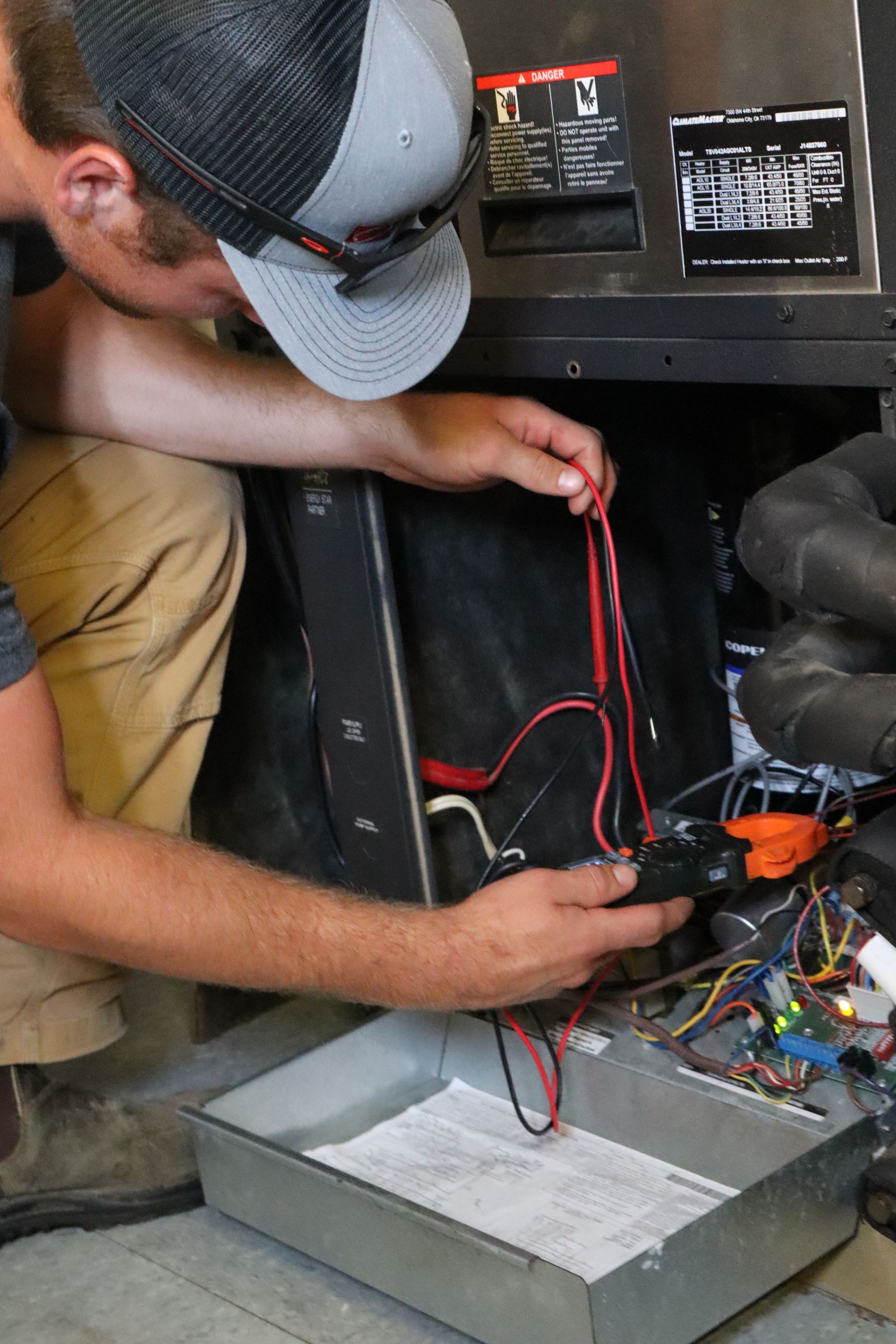
- Electrical Safety and Control Testing: We test line voltage, control boards, relays, capacitors, and safety limit switches.
- Reversing Valve and Defrost Cycle Verification: We evaluate the mechanical operation of the reversing valve and ensure defrost cycles activate properly in cold conditions.
- Sealed System Inspection: We examine the refrigeration circuit for pressure imbalances, restrictions, and component integrity using certified recovery equipment.
- Airflow and Blower Assessment: We inspect cross-flow indoor fans and outdoor blower assemblies to ensure proper air volume delivery without motor strain.
- Operational Verification: We verify the unit across heating, cooling, and electric auxiliary modes to ensure seamless temperature control.
Routine Preventative Maintenance for Extended Unit Life
Scheduling routine heat pump maintenance keeps components clean and reduces the risk of sudden mid-season failures.
Professional servicing includes deep-cleaning indoor evaporator and outdoor condenser coils, clearing condensate collection pans and drainage ports, inspecting wall sleeve seals for weather intrusion, and verifying electrical heating element draw. For rental properties and multi-residential buildings, bi-annual maintenance ahead of the peak summer and winter seasons ensures consistent comfort and lower operating costs.
Frequently Asked Questions
What is the primary difference between a PTAC and a PTHP?
A standard PTAC provides air conditioning and relies entirely on electric resistance elements for heat. A PTHP (Packaged Terminal Heat Pump) includes a reversing valve that allows the refrigeration circuit to run in reverse, providing energy-efficient heat during cool weather and switching to electric backup elements only when outdoor temperatures drop significantly.
Why is water leaking from my through-the-wall heat pump into the room?
Indoor water leaks typically occur when the condensate drain pan or exterior drainage ports become blocked with dirt or debris. Leaks can also happen if the exterior wall sleeve was installed without the necessary slight downward slope toward the outside, causing condensation to pool backward into the living space instead of draining outdoors.
How often should packaged terminal heat pumps receive professional maintenance?
Residential units should receive professional maintenance at least once per year. In multi-residential buildings, rental suites, and hospitality settings with continuous use, scheduling bi-annual inspections in the spring and autumn ensures reliable operation and prevents mid-season breakdowns.
Conclusion
Packaged terminal heat pumps provide reliable, zoned climate control for residential suites, rental properties, and home additions. When mechanical wear, electrical faults, or drainage blockages interfere with performance, professional diagnosis ensures safe, long-lasting operation.
Link ClimateCare is locally owned and provides professional heating, cooling, indoor air quality, and maintenance services across Beaverton, Lindsay, Peterborough, and the Kawartha Lakes region. Backed by our 100% satisfaction guarantee and 24/7 emergency response, our experienced technicians are ready to restore your home's comfort.
Contact Link ClimateCare today to schedule a professional evaluation, or explore our latest heating and cooling guides to discover more home comfort solutions.