Why Hybrid Heating Beats a Standard Furnace in Moderate Climates
Why a Dual Fuel Heat System Makes Sense in a Moderate Climate
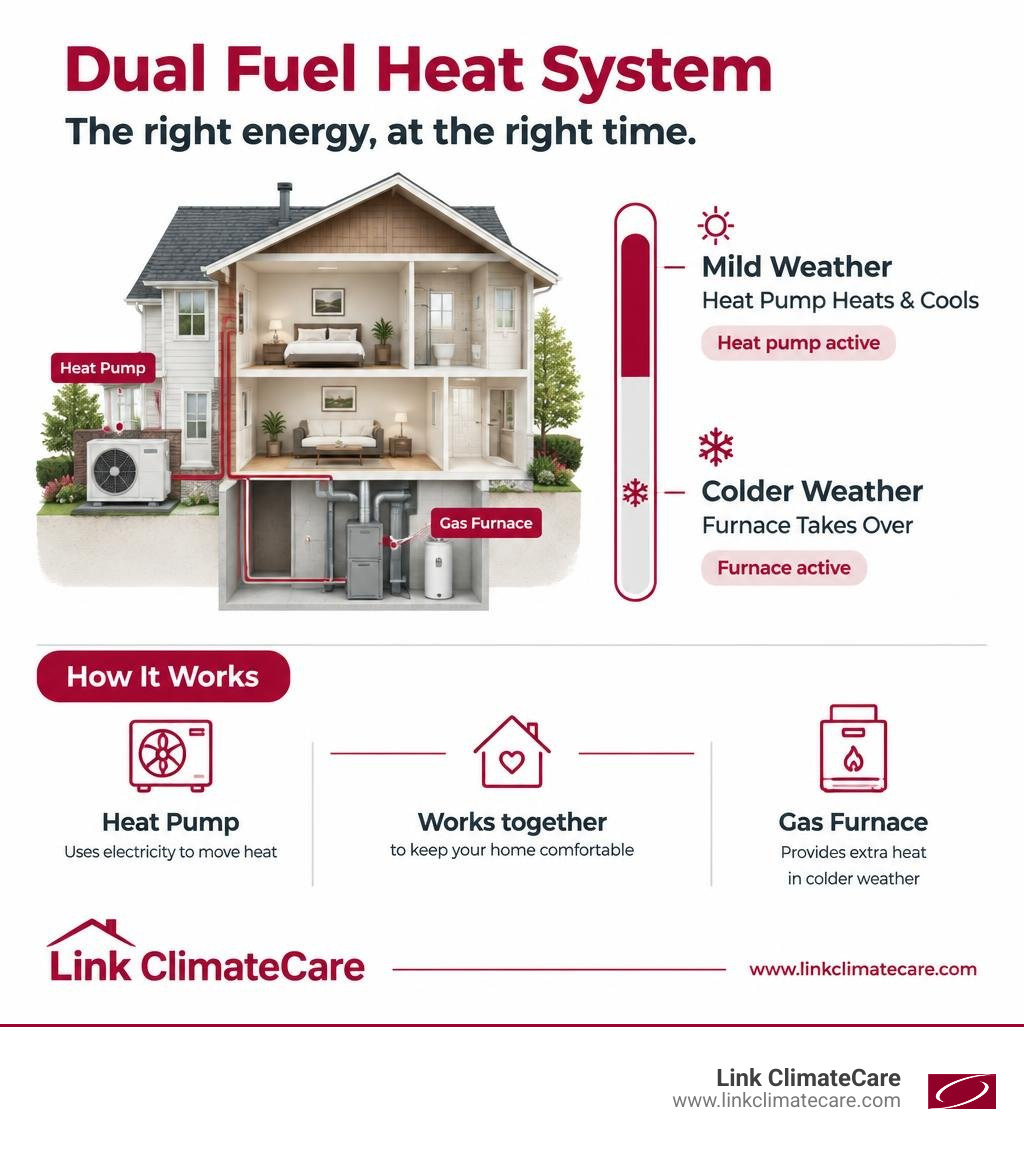
A dual fuel heat system pairs an electric heat pump with a gas furnace. In milder weather, the heat pump heats your home and provides summer cooling. When it gets colder, the furnace takes over. For a Kawartha Lakes homeowner, that can mean using less gas without giving up reliable heat on freezing days. Whether it lowers your bills depends on local energy prices, your home, and how the system is set up.
What Is a Dual Fuel Heat System and How Does It Work?
Think of a hybrid heating setup like a hybrid car. When you drive at lower speeds around town, a hybrid car cruises on its electric battery to save fuel. When you merge onto the highway or climb a steep hill, the gas engine kicks in to provide full power. A dual fuel HVAC setup works on the exact same principle.
Instead of relying solely on burning fossil fuels all winter long, the setup combines two distinct heating appliances: an electric air-source heat pump and a traditional natural gas or propane furnace. The system leverages the unique strengths of both technologies.
Traditional furnaces generate heat through combustion, which means burning gas to produce warm air. Heat pumps do not create heat out of thin air; they simply move existing thermal energy from one place to another using a continuous refrigeration cycle. Even when the outside air feels chilly, it still contains ambient heat.
Because transferring heat requires far less energy than creating it, heat pumps operate at an astonishing efficiency level—often achieving a Coefficient of Performance (COP) between 2.0 and 4.0+. In practical terms, that means they operate at 200% to 400% efficiency during mild weather. For a deeper technical perspective on these mechanics, federal researchers explain what a dual-fuel heat pump is and how it balances fuel sources.
During the warmer months, the system reverses direction entirely. The heat pump extracts warmth and humidity from inside your house and transfers it outdoors, acting as a central air conditioner. When autumn arrives, it reverses again to supply gentle warmth. When deep winter freezes hit, the backup fuel source engages seamlessly.
The Core Components: Electric Heat Pump and Gas Furnace
To understand how these components interact, let's look under the hood. A complete hybrid system consists of three main elements:
- The Outdoor Electric Heat Pump: This unit looks like a standard central air conditioner. It contains a variable-speed compressor, an outdoor coil, and an expansion valve that circulates refrigerant to capture ambient outdoor heat.
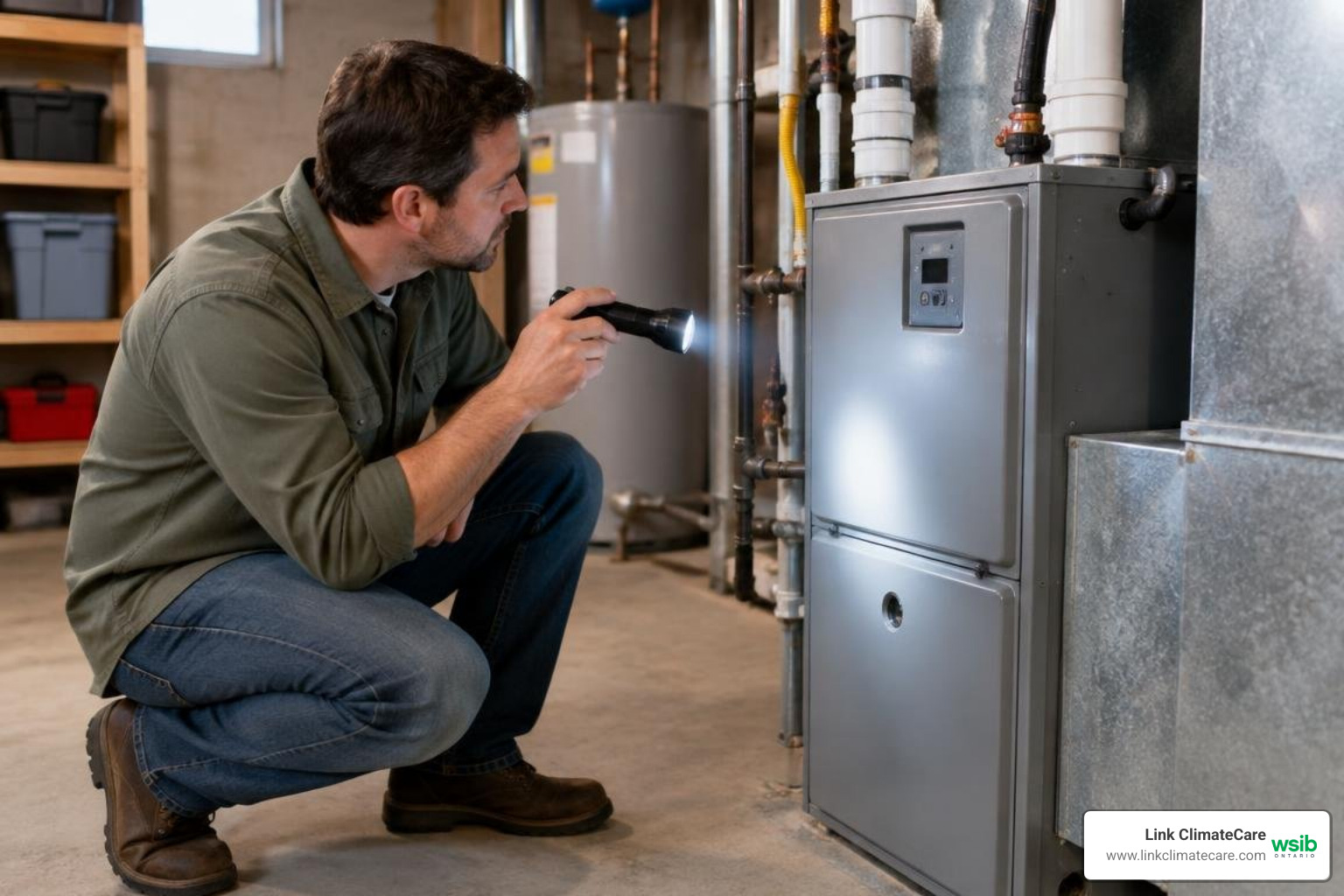
- The Indoor Gas Furnace and Evaporator Coil: Installed inside your utility room or basement, the furnace provides a powerful secondary heating source. It also houses the variable-speed blower fan that circulates conditioned air across your ductwork year-round, as well as an indoor coil paired with the heat pump.
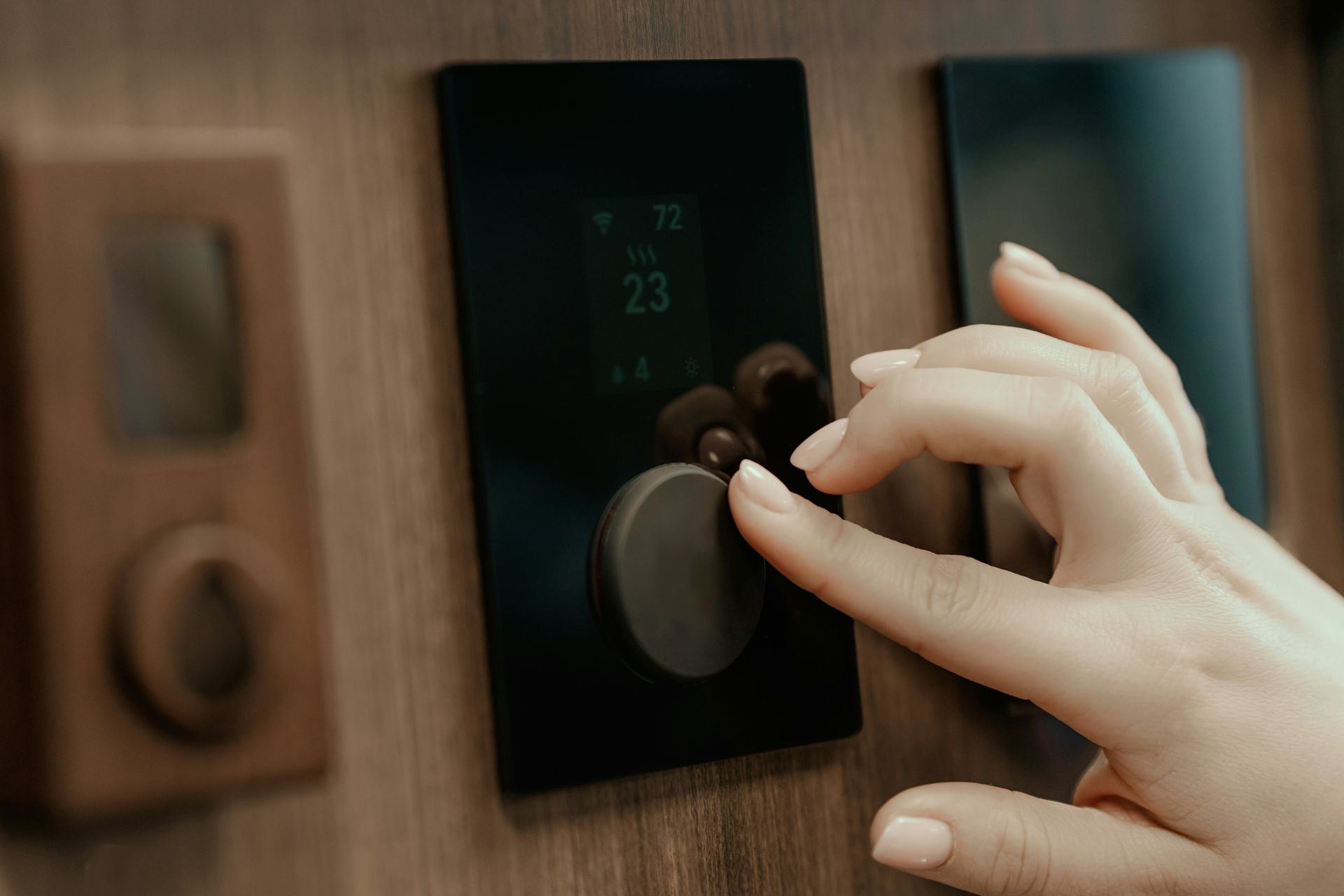
- The Intelligent System Controller: This control brain monitors both indoor temperature demands and outdoor climate conditions to dictate which appliance runs at any given moment.
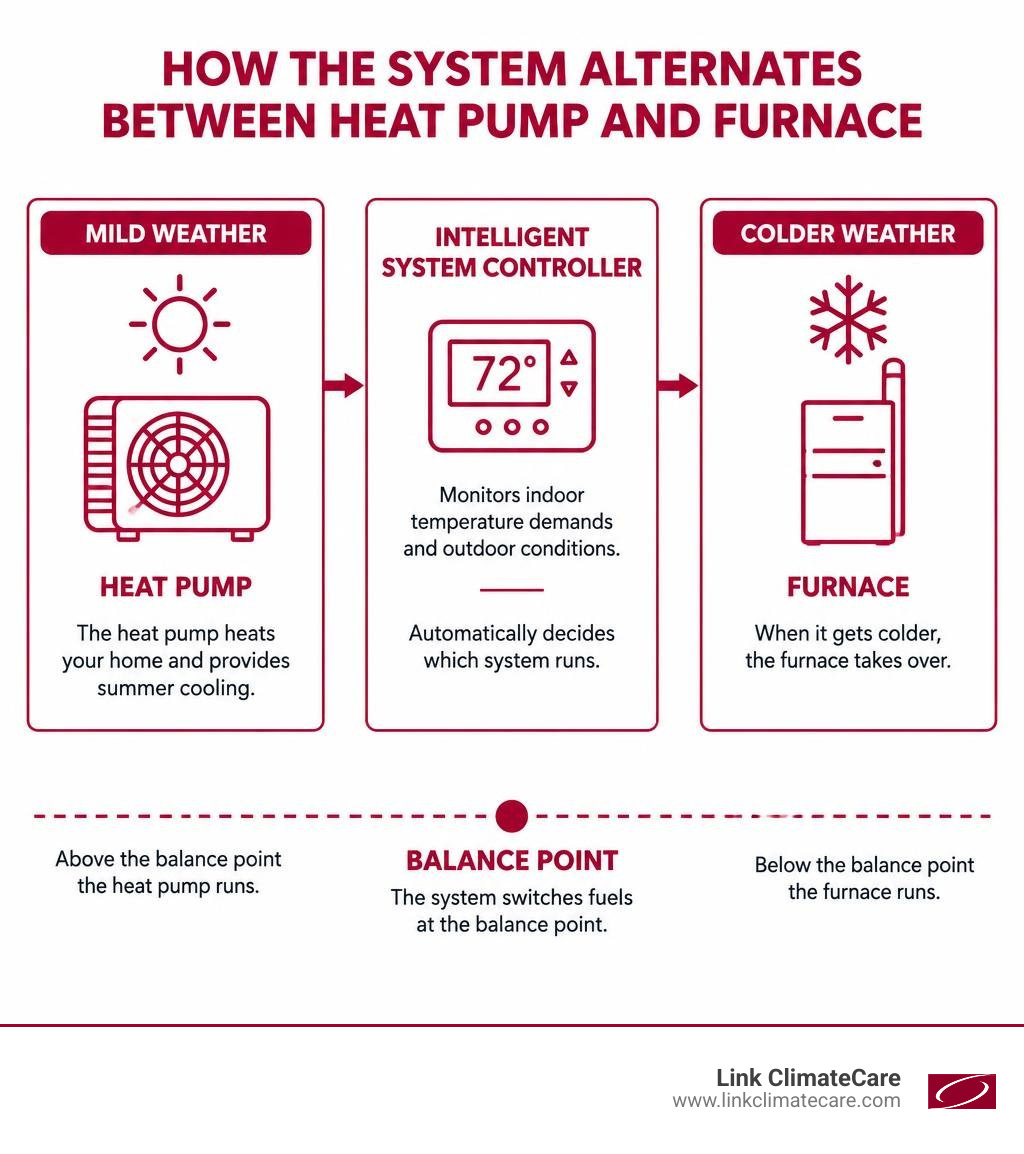
Industry experts provide comprehensive overviews detailing how a dual-fuel heat pump and furnace system works, demonstrating how modern heat pumps integrate directly with traditional furnace equipment to eliminate the need for inefficient electric resistance backup coils.
The Balance Point and Automated Fuel Switching
The true magic of a hybrid system lies in its ability to switch fuels automatically without requiring you to touch a button. This handoff happens at what HVAC professionals call the "balance point."
There are actually two types of balance points to consider:
- The Thermal Balance Point: The outdoor temperature at which the heating capacity of the heat pump exactly matches the natural heat loss of your home. Below this point, the heat pump needs auxiliary assistance to maintain your indoor setpoint.
- The Economic Break Point: The outdoor temperature threshold where it becomes mathematically cheaper to burn gas than to run the electric compressor, based on local utility rates for electricity versus natural gas or propane.
In standard residential setups, the system transitions between fuel sources when outdoor temperatures fall between 35°F and 40°F (1.6°C to 4.4°C). Modern smart thermostats and outdoor sensors monitor real-time conditions, locking out the heat pump and firing the furnace burner only when outdoor temperatures plunge below this preset threshold.
Dual Fuel vs. Standard Furnace: Performance, Comfort, and Humidity
Choosing the right setup for home heating involves weighing upfront installation costs against operational efficiency, equipment lifespan, and day-to-day comfort. Here is how a hybrid setup compares against standalone alternatives:
Heating Efficiency and Energy Consumption
When you burn fuel in a conventional furnace, you can never get more energy out than what exists in the fuel itself. Even the highest-efficiency condensing furnaces top out around 98.5% AFUE (Annual Fuel Utilization Efficiency), meaning 1.5% of the fuel's energy is lost through venting. Older baseline furnaces often operate between 80% and 85% AFUE, losing up to 20 cents of every heating dollar up the exhaust flue.
By contrast, because an electric heat pump moves heat rather than generating it, it routinely delivers up to 300% efficiency under ideal operating conditions. That translates to three units of heat delivered inside your home for every single unit of electrical energy consumed.
According to data from the U.S. Department of Energy (DOE), using an efficient heat pump can reduce your electricity use for heating by approximately 75% compared to electric resistance furnaces or baseboard heaters. In regions with four distinct seasons, a dual fuel setup runs on high-efficiency electricity up to 85% of the total heating season, reserving the gas furnace strictly for deep winter freezes.
Winter Indoor Comfort and Humidity Balance
Have you ever noticed that standard gas heating can feel like a blast furnace? Traditional single-stage gas furnaces deliver brief bursts of hot air (often exiting supply registers at 120°F to 140°F), quickly roasting the room before shutting down. This rapid cycle draws heavy combustion air and frequently dries out indoor air, leading to static electricity, itchy skin, and dry nasal passages.
A heat pump operates differently. It delivers a steady, gentle stream of warm air (typically around 90°F to 105°F) over longer, continuous cycles. This sustained circulation eliminates cold spots across your floor plan, keeps air moving steadily through your home filtration setup, and preserves natural indoor humidity. When sub-zero weather sets in and rapid heat recovery is mandatory, the gas furnace fires up to deliver robust, high-temperature heat precisely when you need it most.
Practical, Financial, and Climate Considerations for Homeowners
While the benefits of hybrid heating are clear, deciding whether to install one requires evaluating your property's infrastructure, local weather patterns, and budget.
Long-Term Cost Savings with a Dual Fuel Heat System
Because energy markets are notoriously volatile, relying exclusively on one fuel leaves homeowners vulnerable to sudden rate hikes. If natural gas prices spike, an all-gas home has no alternative. If peak electricity prices surge during winter grid constraints, an all-electric home pays the price.
A hybrid system serves as a hedge against unpredictable utility rates. Your technician can calibrate the balance point to favor whichever fuel source offers the lower operating cost per BTU in your service territory. Over a 15-year operational lifecycle, shifting the bulk of your heating load to an ultra-efficient heat pump can yield substantial cumulative utility savings.
To ensure both heating sources continue operating at peak efficiency, homeowners should schedule seasonal professional furnace maintenance in early autumn and dedicated heat pump maintenance in the spring.
Is a Dual Fuel Heat System Right for Your Home?

Hybrid systems are particularly well-suited for moderate to cold-climate regions where autumn and spring bring extended periods of 35°F to 55°F weather, followed by brief stretches of deep sub-freezing temperatures.
Before proceeding, our technicians always evaluate several critical structural factors:
- Ductwork Capacity and Static Pressure: Heat pumps require proper airflow volume across the indoor coil to operate efficiently without tripping high-pressure safety switches.
- Electrical Panel Headroom: Adding an outdoor heat pump requires adequate 200-volt circuit capacity in your breaker panel.
- Building Envelope Quality: Homes with updated insulation and sealed windows maximize heat pump runtime before the furnace ever needs to take over. If you live in a heritage home, take a look at our guide on five considerations when choosing a heat pump for your older home to see how existing construction affects sizing.
Retrofitting and Financial Incentive Programs
One of the greatest advantages of hybrid heating is retrofit flexibility. You do not always have to rip out your entire heating setup to enjoy the benefits of dual fuel technology. If your existing gas furnace is relatively new and in good working order, our certified technicians can frequently install an indoor cased evaporator coil on top of your existing furnace and connect it to a new outdoor heat pump.
If your existing equipment is experiencing mechanical issues or failing parts, scheduling professional furnace repair or expert heat pump repairs can restore baseline functionality before you plan a full hybrid transition.
Furthermore, eco-friendly heating retrofits qualify for substantial financial incentives. Depending on your location and equipment efficiency tiers, homeowners can take advantage of federal tax credits of up to $2,600 alongside local utility rebates. For example, some regional utility programs offer conversion rebates ranging from $1,500 to $2,400 when switching from a baseline gas setup to a qualifying hybrid heat pump system that adheres to strict compressor lockout and balance point guidelines.
Frequently Asked Questions About Hybrid Heating Systems
At what outdoor temperature does the system switch from heat pump to gas?
Most residential hybrid setups are calibrated to switch over between 35°F and 40°F (1.6°C and 4.4°C). However, this is not a hard-and-fast rule. A licensed technician can adjust your thermostat's auxiliary lockout and compressor shutdown temperatures higher or lower based on local electric rates, fuel prices, and the thermal insulation properties of your specific home.
Can I add a heat pump to my existing furnace to create a dual fuel system?
Yes, provided your current furnace, ducting, and electrical setup are compatible. The furnace must be capable of supporting the required airflow CFM (cubic feet per minute), and the blower motor must integrate smoothly with hybrid sub-base thermostat controls. A qualified technician will inspect your furnace cabinet dimensions, check static pressure, and ensure proper matching between your furnace blower and the new heat pump's evaporator coil.
How much can a hybrid heating setup reduce overall energy costs?
Actual savings vary based on your local utility rate structure and fuel costs. Because an electric heat pump moves heat at 200% to 300%+ efficiency during mild weather, it handles up to 85% of annual heating hours far more efficiently than burning gas alone. Homeowners replacing an aging furnace and baseline air conditioner with an optimized hybrid system often see double-digit reductions in their annual seasonal heating expenditures.
Conclusion
A dual fuel heating system delivers the best of both worlds: the ultra-high electrical efficiency and summer cooling performance of an advanced heat pump, paired with the deep-freeze heating power of a gas furnace. By automatically choosing the most cost-effective fuel source based on real-time weather conditions, you can protect your household against volatile energy prices while enjoying steady indoor comfort all year long.
At Link ClimateCare, we bring decades of hands-on experience helping homeowners across Beaverton, Lindsay, Peterborough, and the Kawartha Lakes find the right heating and cooling solutions. Whether you are looking to retrofit your existing setup or install a complete hybrid system backed by our 100% satisfaction guarantee and 24/7 emergency response, our licensed technicians are here to help. To discover more ways to optimize your home's comfort and efficiency, explore expert heating advice on our blog.